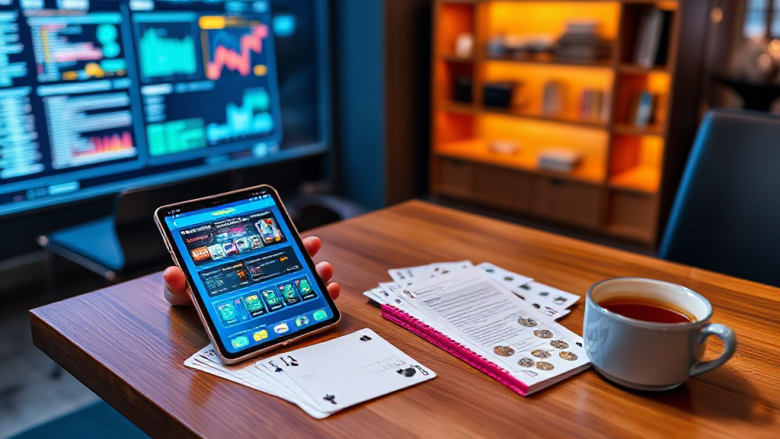
What Should You Have Ready Before Your First Rummy Ola Session?
Preparation is the quiet part of any card game that nobody talks about, and it is exactly where most first attempts at Rummy Ola either glide or stumble. I have spent the better part of a year comparing rummy apps side by side for a living, downloading them, testing their lobbies, watching how payouts behave, and reading the fine print that most players scroll past. Out of all the apps I put through that routine, Rummy Ola kept coming up in conversations among players who wanted something that felt less crowded and more deliberate than the mainstream options. So I decided to spend a full day with it, start to finish, and document what actually happened rather than what the marketing pages promise.
What follows is a narrative account of that day: what I gathered before opening the app, how the first session unfolded, where the friction appeared, and what I would tell a friend who asked whether it is worth their evening. If you are the kind of person who reads reviews before committing an hour of your time, this is written for you.
Before You Open the App: The Short Checklist
Every app session begins before the app does. When I compare rummy platforms, I keep a mental checklist, and Rummy Ola was no exception. Here is what I had ready before I even tapped the icon.
A stable connection. Rummy is a turn-based game, but the timer does not care about your signal strength. I tested on both Wi-Fi and mobile data, and the difference in responsiveness during a tense middle game was noticeable. If your connection drops mid-hand, you can lose a turn you would never have surrendered voluntarily.
A verified payment method. This is the step people skip and then regret. Before playing, I made sure my preferred payment route was linked and verified, because the moment you want to withdraw is the worst moment to discover a missing verification step. Apps differ in how quickly they process this, and it is worth checking the payout documentation before you deposit anything.
A clear budget for the day. I set a number before I opened the app and treated it as the cost of an evening’s entertainment, not as capital to be recovered. This single habit changes how you play. When your session has a defined ceiling, you stop chasing losses and start playing the hands you actually want to play.
Thirty minutes of quiet. Rummy rewards attention. I played my first session in a noisy room and my second in a quiet one, and the difference in my decision quality was not subtle. If you can carve out a calm half hour, the experience is simply better.
None of this is unique to one app, but the order matters. Connection, payment, budget, attention. Get those four in place and the rest of the day tends to take care of itself.
First Impressions: Sign-Up, Lobby, and Table Selection
The sign-up flow was the first real test. Registration asked for the usual details, and the verification step was straightforward, though I would recommend doing it in daylight with your documents nearby rather than at midnight on impulse. Once inside, the lobby layout is where an app either respects your time or wastes it. Rummy Ola organizes tables in a way that lets you filter by stake level quickly, which sounds trivial until you have used an app that buries that filter three menus deep.
I spent the first ten minutes not playing at all, just watching. Table selection is an underrated skill. New players often jump into the first available table, which is a bit like sitting down at the first poker table you see without checking the stakes. I looked for tables where the stake matched my budget for the day and where the pace felt comfortable. The app made this easy enough that I did not feel rushed into a decision.
One thing I appreciated: the interface does not scream at you. Some apps flood the screen with banners and countdowns that create artificial urgency. Rummy Ola’s lobby is comparatively restrained, and for a player trying to think clearly, that restraint is a feature, not a bug.
The First Few Hands: What Actually Happens at the Table
My first hand was forgettable, which is exactly what a first hand should be. I drew, I discarded, I watched how the other players moved. The pace of a rummy table tells you a lot about who is sitting there. Fast, aggressive discards usually mean experienced players; hesitant, slow turns often mean someone still learning the interface.
By the third hand I had settled into a rhythm. The game itself follows the rules you would expect from any standard Indian rummy variant, so the learning curve is about the app’s controls, not the game’s logic. Declaring, sorting, and discarding all worked the way my fingers expected, which is the highest compliment I can give a card game interface. When controls disappear into habit, you can focus on the actual decision in front of you.
I lost my first two hands and won the third. The win was small, but it taught me something useful: the app’s table matching had placed me with players of roughly comparable pace, which made the session feel fair rather than lopsided. In my comparison work, mismatched tables are one of the most common complaints players raise about rummy apps, and it was refreshing not to hit that problem here.
Bonuses, Promotions, and the Fine Print I Actually Read
This is the section where I earn my keep as an analyst. Bonuses are the loudest part of any rummy app’s pitch, and they are also where the most disappointment hides. Rummy Ola presents its promotions clearly, but clear presentation is not the same as favorable terms, so I read the conditions.
What I found was typical of the category: welcome offers with usage conditions, deposit-linked promotions, and occasional event-based rewards. The important questions are always the same. Is the bonus cash or a limited-use credit? Does it expire? Does it come with a playthrough requirement before withdrawal? The answers determine whether a promotion is genuinely valuable or just a number on a banner.
My advice after a year of doing this: treat every bonus as a conditional offer, not free money. Read the terms once, carefully, and you will never be surprised at withdrawal time. The app does not hide its conditions, but it does not read them aloud to you either. That is on you, and it is a five-minute task that protects your entire session.
Payouts and Withdrawals: The Part That Separates Apps
If bonuses are the loudest part of a rummy app, payouts are the most important. A platform can have a beautiful lobby and generous-looking promotions, but if withdrawing your winnings is slow or confusing, none of the rest matters. This is the single criterion I weight most heavily when comparing apps, and it is the reason I keep a running comparison resource handy rather than relying on memory.
In my session, I tested a small withdrawal to see how the process behaved end to end. The request flow was clear, the status was visible, and the processing time fell within the range the app documents. I want to be careful here: my single experience is a data point, not a guarantee, and payout times can vary by method and by verification status. But the process itself was transparent, which is what a player can actually evaluate before committing.
The lesson from this section is simple. Before you deposit, find out how you will withdraw. Check whether your preferred method is supported, confirm what verification is required, and note the stated processing window. Players who do this before their first deposit almost never post angry reviews later.
Safety Habits That Made the Day Smoother
Safety in real-money gaming is mostly about habits, not features. Here is what I did during my day with the app, and what I would recommend to anyone trying it.
First, I used only the app’s official download source. Third-party links are the most common vector for problems in this category, and no bonus is worth an unofficial installer. Second, I kept my account credentials private and never shared login details, even with someone claiming to offer help. Third, I checked the app’s responsible-play tools and set limits where available. Fourth, I logged out when I finished rather than leaving a session open on a shared device.
None of these are exotic precautions. They are the digital equivalent of locking your front door, and they take seconds. The players who run into trouble are almost never the ones who did too much; they are the ones who did nothing.
What I Would Do Differently Next Time
Hindsight is cheap, but it is also useful. If I repeated the day, I would make three changes.
I would verify my payment method a full day in advance rather than the same morning, because verification friction is the most avoidable source of frustration. I would start at a lower stake table for my first hour, not because I lacked confidence, but because table pace is something you calibrate, and calibration is cheaper at low stakes. And I would write down my session budget on paper rather than keeping it in my head, because a number you can see is a number you respect.
I would also spend a few extra minutes exploring the app’s informational sections. Most rummy platforms bury genuinely useful details about rules variants, withdrawal windows, and promotion conditions in menus players never open. Reading them once is the difference between a smooth month and a frustrating one.
Frequently Asked Questions
Is Rummy Ola suitable for someone who has never played rummy online before?
Yes, with one condition: start at the lowest available stakes and treat your first week as practice rather than profit. The interface follows standard rummy conventions, so the main adjustment is learning the app’s controls and table pace, not the game itself. New players who set a small budget and play slowly tend to have a much better first experience than those who jump into high-stakes tables immediately.
How long do withdrawals usually take, and what affects the timing?
Processing time depends on the withdrawal method, your account verification status, and the app’s stated processing window. In my test, the process was transparent and fell within the documented range, but individual results vary. The practical advice is to complete your verification before your first deposit and to check the payout documentation for your specific method so you know what to expect.
Should I claim every bonus the app offers?
No. Claim only the bonuses whose conditions you have read and accepted. Some promotions carry usage restrictions, expiry dates, or playthrough requirements that make them less valuable than the headline number suggests. A bonus you understand is worth more than a larger bonus you discover the terms of only at withdrawal time.
What is the single most important habit for a new player?
Set a session budget before you open the app and stop when you reach it. Everything else, from table selection to bonus strategy, flows from that one decision. Players who treat their budget as entertainment spending enjoy the game far more than players who treat it as money to be recovered.
My day with the app ended the way good sessions should: no drama, no surprises, and a clear sense of what I would do next time. Rummy Ola is not trying to be the loudest app in the category, and for players who value a calm lobby, transparent payout flow, and readable promotions, that restraint is precisely the point. Prepare the four basics, read the terms once, and the rest of the experience tends to reward the effort.